“
Covering the basics  https://groupfinder.eu/library?category=guides-how-to&search=f1=133
” is a easy-to-follow set of articles helping players get through the first steps of the game. You found a game to join? Well done, but now what?
A character
What makes a good character to play? Is it optimizing your stats to be the most overpowered character? Picking the right skills, feats, powers or spells?
For some players, yes - that is important. And at the end of the day, you don’t want to end up with a character who will be outdone by everyone else in your party. But at the same time, your character should be more than just useful - they should be interesting.
They are more than just “Human Fighter” or an “Elf Ranger”. When creating a character,
what is important, but to create a character the other players and the world will want to interact with, focusing on
who is even more vital.
We will not be focusing on the intricate details of how you should create your character sheet, instead the article will serve as a guideline of how to flesh out your new hero (or anti-hero).
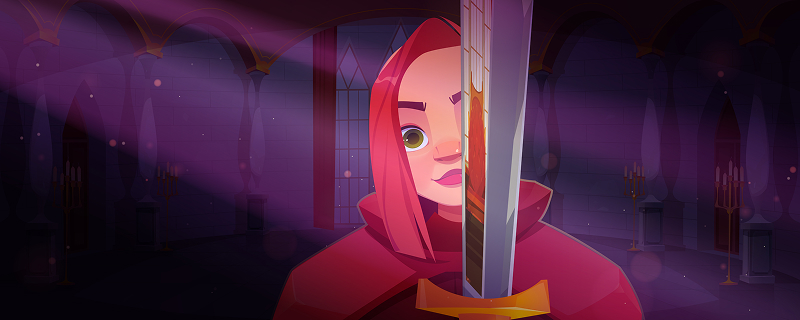
Your character should be more than just a two-dimensional adventurer. Make them real and the game will treat them as such.
Who is your character?
To start weaving your character into someone interesting, you need to find that core concept to start building around.
For inspiration, think back at some characters from a book, movie, tv show, game or real life. Find someone that has that core essence that you feel would be interesting to roleplay. Perhaps Rincewind the tourist from Discworld, Beorn from The Hobbit, Donna from Doctor Who or perhaps Esquie from Clair Obscur.
Whichever character comes to you as someone you’d like to somehow pay homage to, can be worked with. Think of what makes that character interesting to you, is it their attitude towards problems, other people or nature. Are they clumsy, perceptive, analytical or indifferent towards things? The way they see the world is a great direction to have.
Now the end-goal is not to copy the character 1 to 1. That is almost never going to work. The nature of the game is likely to be very much based on random outcomes, no matter how well-planned and foolproof your approach is. As dice determine the success of various attempts, it is best to keep that in mind.
A bad roll can turn your James Bond into Johnny English.
Flesh them out
If you have a core concept, you can start working on making them more real. Ask yourself various questions about them. “What made them like this?” “Why would they be adventuring?” “Is there a problem they are running from?” “What is their favourite dish?”
Yes, even figuring out their favourite food can be a great process of figuring out who they are. It might not be a fact that would ever come to play, but can be a good stepping stone to actually understanding them. Knowing their favourite dish or colour can be helpful when diving deeper into that answer. Their favourite colour is pink - why? Did they grow up in a house that had pink wallpaper? Or was there an ever-blooming cherry blossom tree that they have fond memories of? Where was that tree? Does it hold some significance to them? Was there another person involved with that fondness? What happened to them? And so forth.
Just like actual humans have preferences that don’t derive from nothing - neither should your character. The more you ask, the more real they become through this. It is highly recommended to write those points down - so you have a written understanding of them. And you can later refer back to the document to remind yourself of who they are.
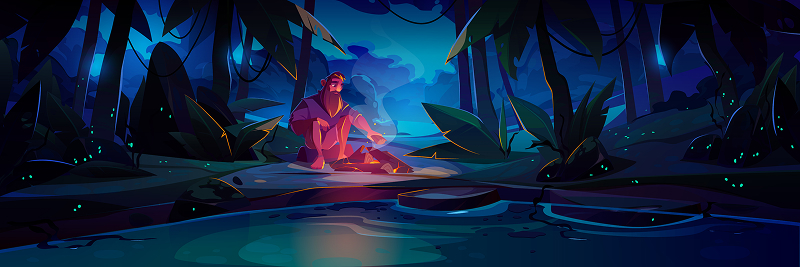
What made them like this? A tragic event in their past or a goal they haven't yet reached?
Backstory
Ask your GM questions about the world and the setting. The more you understand, the easier it will be for you to place them there. If your GM is willing to work with you to flesh out the world around your character’s past, you will end up adding towns, locations, events and traditions to their world.
You may find it difficult to
write your character’s backstory https://groupfinder.eu/library/covering-the-basics-creating-a-character-backstory. You are not a writer, at least thats what you keep telling yourself. Doesn’t matter - your GM is hardly expecting you to write an eloquent piece of literary history. And that is not really that important. What is, is to know where your character came from - do they have a past that slowly catches up to them. A debt that will eventually have to be repaid. Or a goal that they are striving towards, as they have set out on their adventuring path.
You shouldn’t try to aim for a 7-page backstory from the start. Some GMs might find backstories that are too detailed and long to be counter-productive. But setting where they grew up, with whom they interacted back then - how they grew up and mark down some important events that formed them as a character. Think back to the core concept of your character - and reverse-engineer your way towards the events and reasons why they ended up that way.
Generative AI
Now that various AI tools exist, players might find it easy to prompt the LLM with something like
“Write a backstory for my elf ranger. When they were young, their parents abandoned them in a forest. There, wolves adopted them. But the wolves also abandoned them. Now they trust nobody. Their aspiration, though they keep it a secret from others, is to open a bakery.”
And AI will give you a long backstory to work with.
But you are not done. Don’t just copy-paste it into a document and send it to your GM for approval. While using Gemini, ChatGPT or any other AI tool is useful for fleshing out some ideas, you need to make sure they are your ideas.
You can take the draft you have been provided with and start working on the details - AI is unlikely to understand your character perfectly - what it is, that got you interested in them in the first place. Remove, add, rewrite and polish the initial draft. Make sure it is consistent with the world your GM has given you.
And once you are done with an initial version, take some time and read through the whole backstory. Does it make sense to you? Do they feel real? And is the core idea still present?
At the end of the day, it is your character. Using various tools to help you flesh out is helpful, but you should know them better than anyone else. Consider making a short summary section for you and the GM to reference later. Highlight various bits that are important to you.
Connecting people
Your character doesn’t have to be a lone wolf in the world. At times it can be better and more convenient to connect your character with another player’s.
Talk with your party before the game and see if you can find some common ground with some other character. Perhaps they were childhood friends, but drifted apart. Or perhaps they met once on opposite sides of a battlefield. Creating a connection to another character can make it easier for your GM to connect them to their world.
A shared past can be a great framework to make sure your party ends up as a cohesive group, not just “written together”. Your Game Master will have their hands full with various aspects of running the game, they will appreciate it, if you hand them characters that have a reason to adventure together.
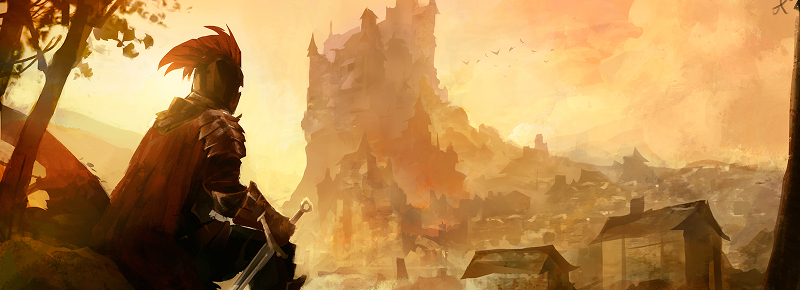
Your character's journey is just beginning. A good backstory is a great foundation to build on.
Work in progress
Your character should not be something that is completed once the first session rolls around. Instead feel free to add bits and pieces as you discover the world through playing. You are bound to find new aspects of the world, that your character could be connected to.
Of course make sure that your GM is notified of these additions. And that it still fits with their vision of the game.
Find your story
If you have a great idea that you want to play with, but haven't found a game to play yet. Look at the games that are
looking for players https://groupfinder.eu/list. Or post your player profile and
find a tabletop rpg group https://groupfinder.eu/players to play with.